By Business Type
Local search works differently for a restaurant, a clinic, a service-area business and a chain. Guides scoped to each.
 Start here
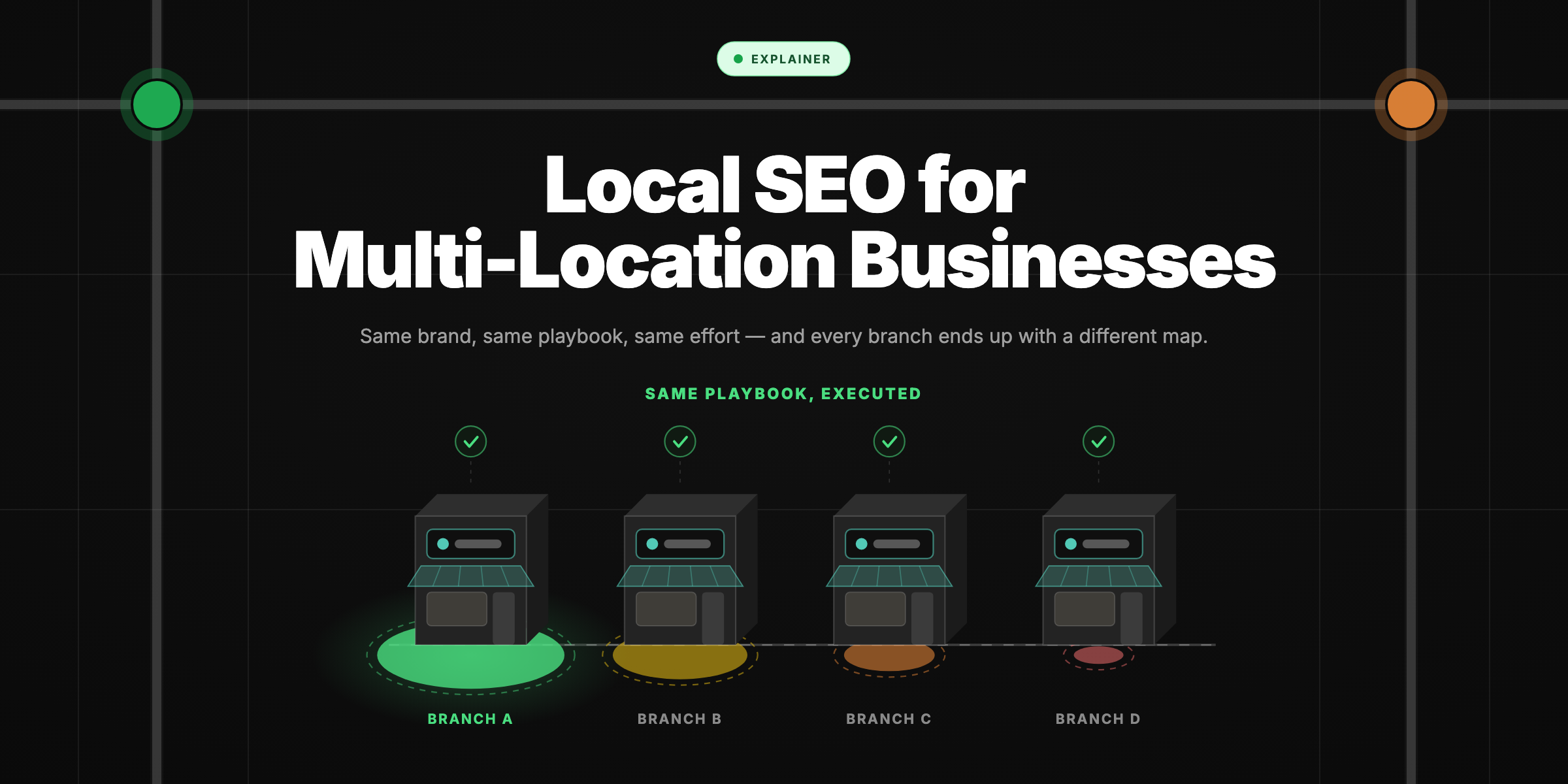
Local SEO for Multiple Locations: Every Branch Ranks Alone
Each branch competes in its own catchment against its own rivals, so a portfolio average misleads. How multi-location visibility diverges, and how to see it.
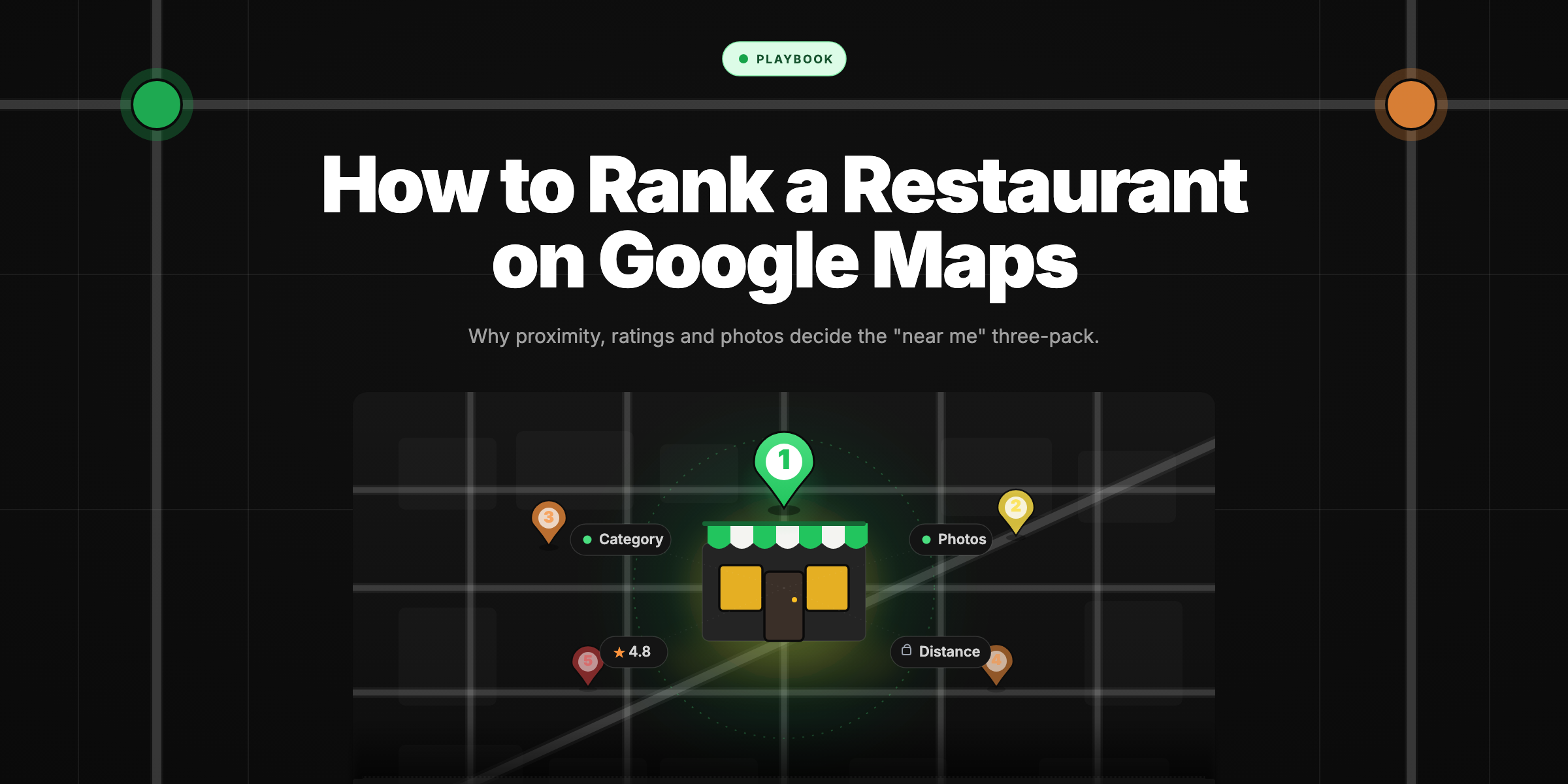
How to Rank Your Restaurant on Google Maps
Hungry diners pick restaurants from the Google Map Pack. How restaurants rank on Maps — proximity, ratings and photos — and how to track it by area.
Jul 14, 2026·11 min read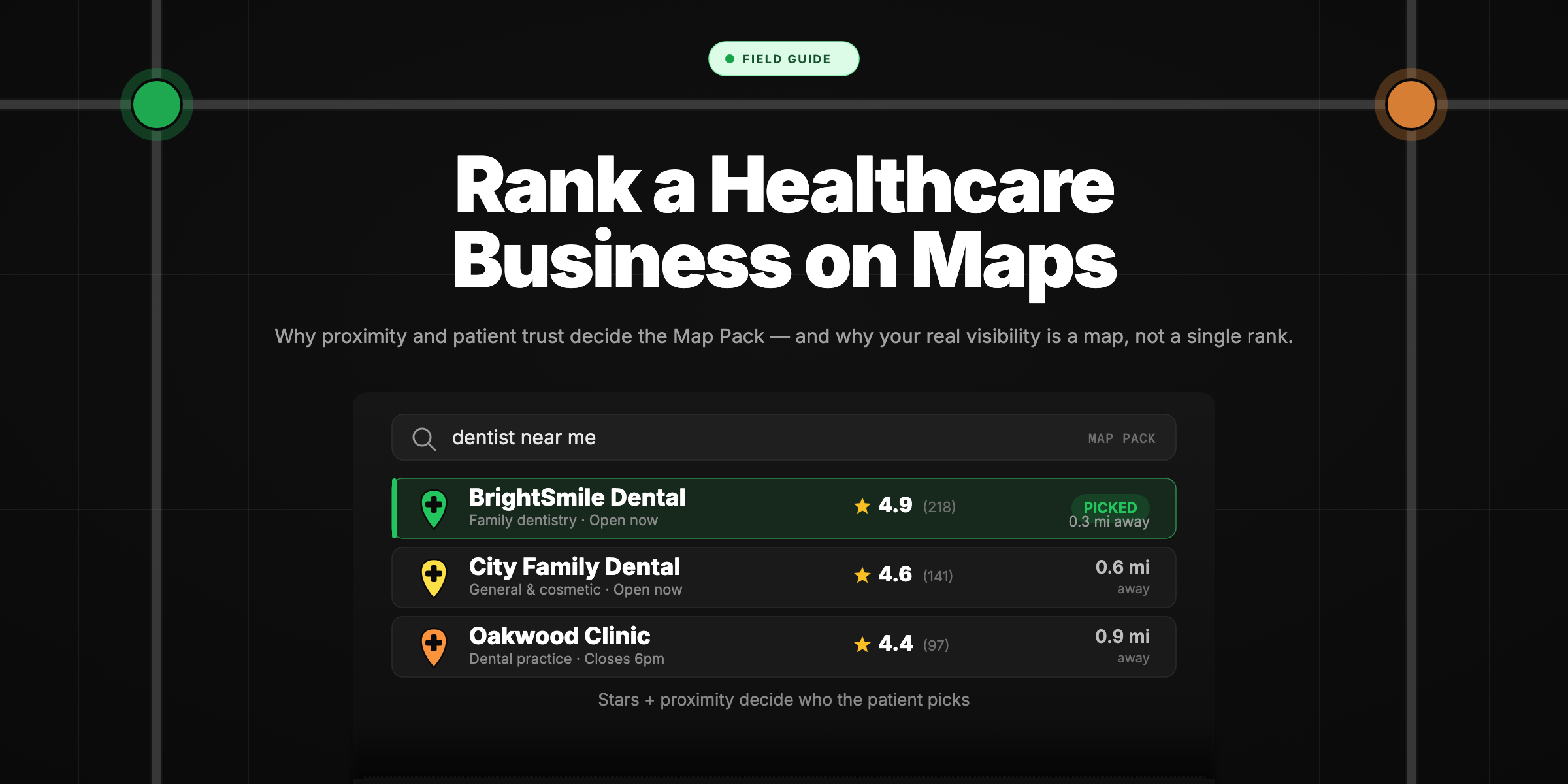
How to Rank a Healthcare Business on Google Maps
Patients pick clinics from the Google Map Pack. How healthcare businesses rank on Google Maps — proximity, reviews, prominence — and how to track it by area.
Jul 13, 2026·11 min read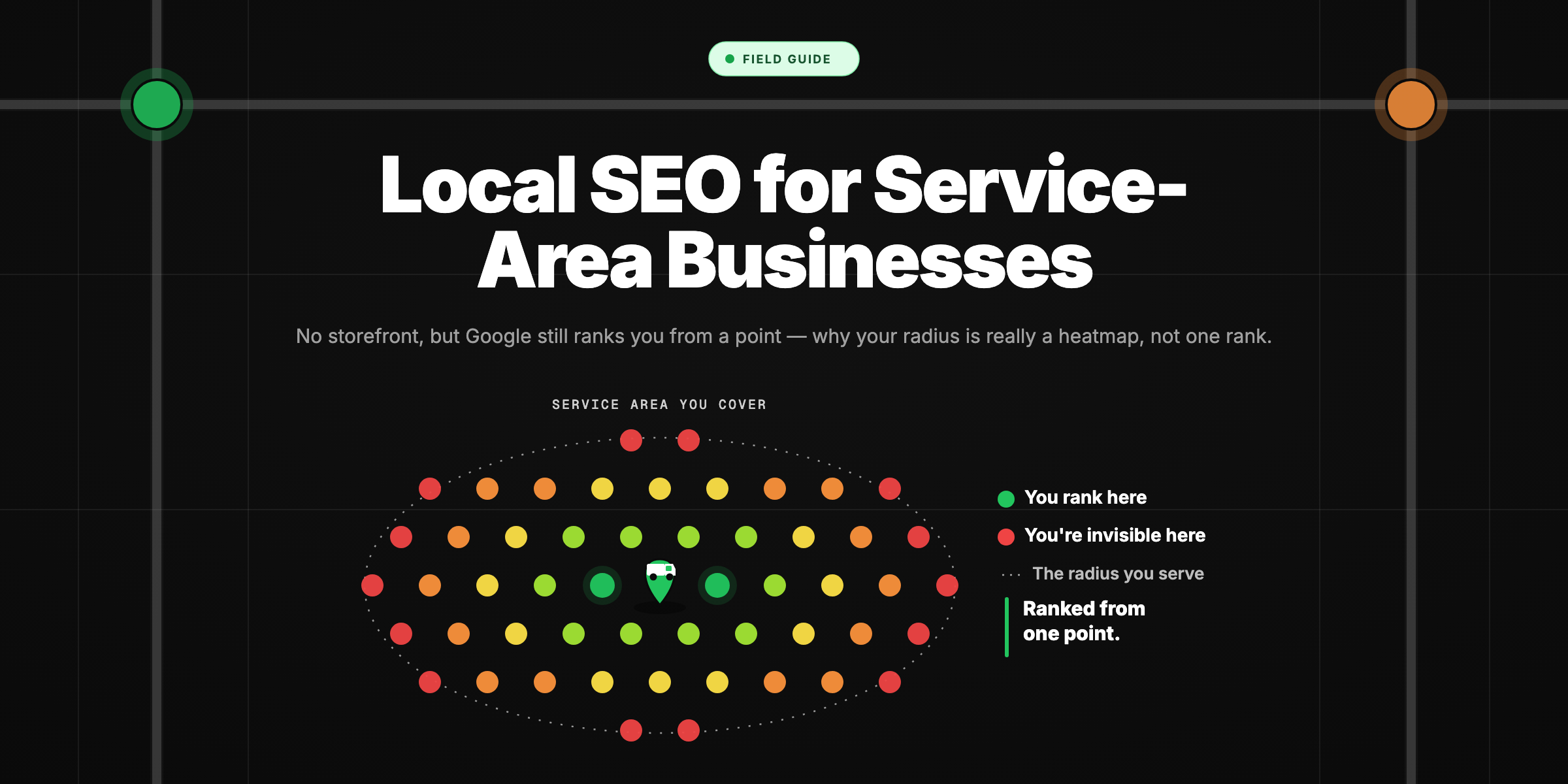
Local SEO for Service-Area Businesses on Google Maps
No storefront, just a service radius? How service-area businesses rank on Google Maps, why ranking fades across your area, and how to track the whole radius.
Jul 10, 2026·9 min read
Nothing to measure proximity from, so coverage across the area you serve is the only honest measurement.
A brand average hides branches that are invisible in their own catchment. Only a per-location view shows it.
The more rivals in your category nearby, the smaller the radius in which you appear at all.
The same advice fails differently depending on what you run
A restaurant, a plumber and a twelve-branch chain have four different problems. Generic advice is written for the storefront case, so if that is not you, the parts that matter are the parts it skips.
By Business Type: common questions
1Does local SEO really differ by type of business?
The ranking factors are the same; what changes is how they land. A dense category in a small area gives you a tight radius of visibility. A service-area business has no fixed point for proximity to be measured from. A multi-location brand has one problem per branch. The advice that ignores this is written for a single storefront.
2How do I track rankings for a service-area business with no storefront?
Measure coverage across the area you serve rather than a position at an address. There is no single point to track from, so a single ranking number describes nothing. Grid coverage across the service area is the only measurement that matches how the business actually works.
3Should a multi-location business run one local SEO strategy or several?
Several. Each location ranks in its own catchment against its own competitors, so a brand-level number is an average of situations that have nothing to do with each other. Two branches on the same national dashboard can be dominant and invisible respectively.
4We moved. Why do we still show up in the old area?
Moving changes the point everything is measured from, and the change is not instant. Businesses regularly report ranking in the old city weeks after a move, and ranking poorly in the new one. It looks like a penalty and usually is not — it is the index catching up.