Where You Rank
Your position on Google Maps is not one number — it changes street by street. Why that is true, and how to measure it.
 Start here
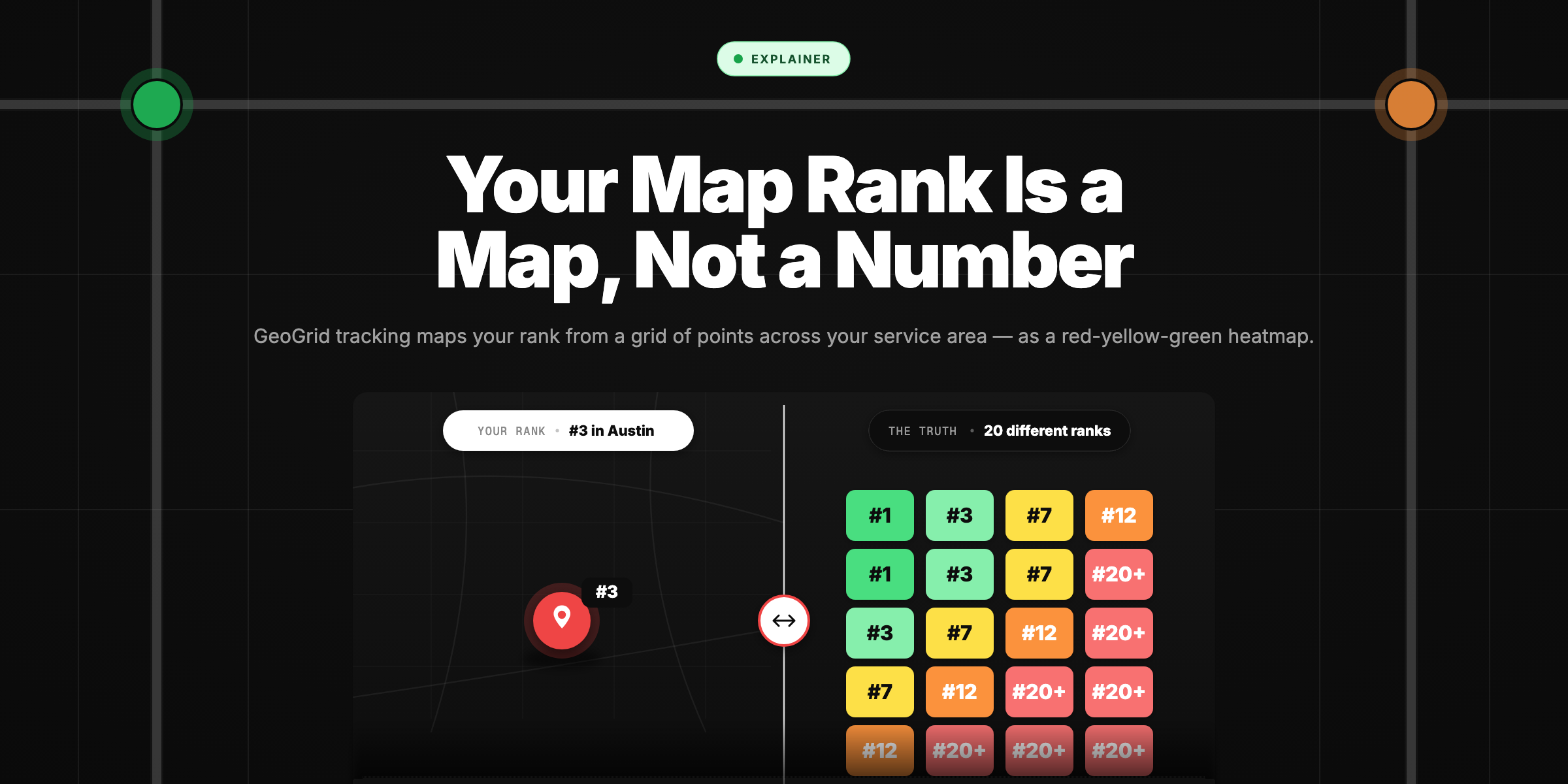
What Is GeoGrid Rank Tracking? A Plain-English Guide
GeoGrid rank tracking measures your Google Maps position across a grid of points near you, then plots it as a red-yellow-green map of where you rank.
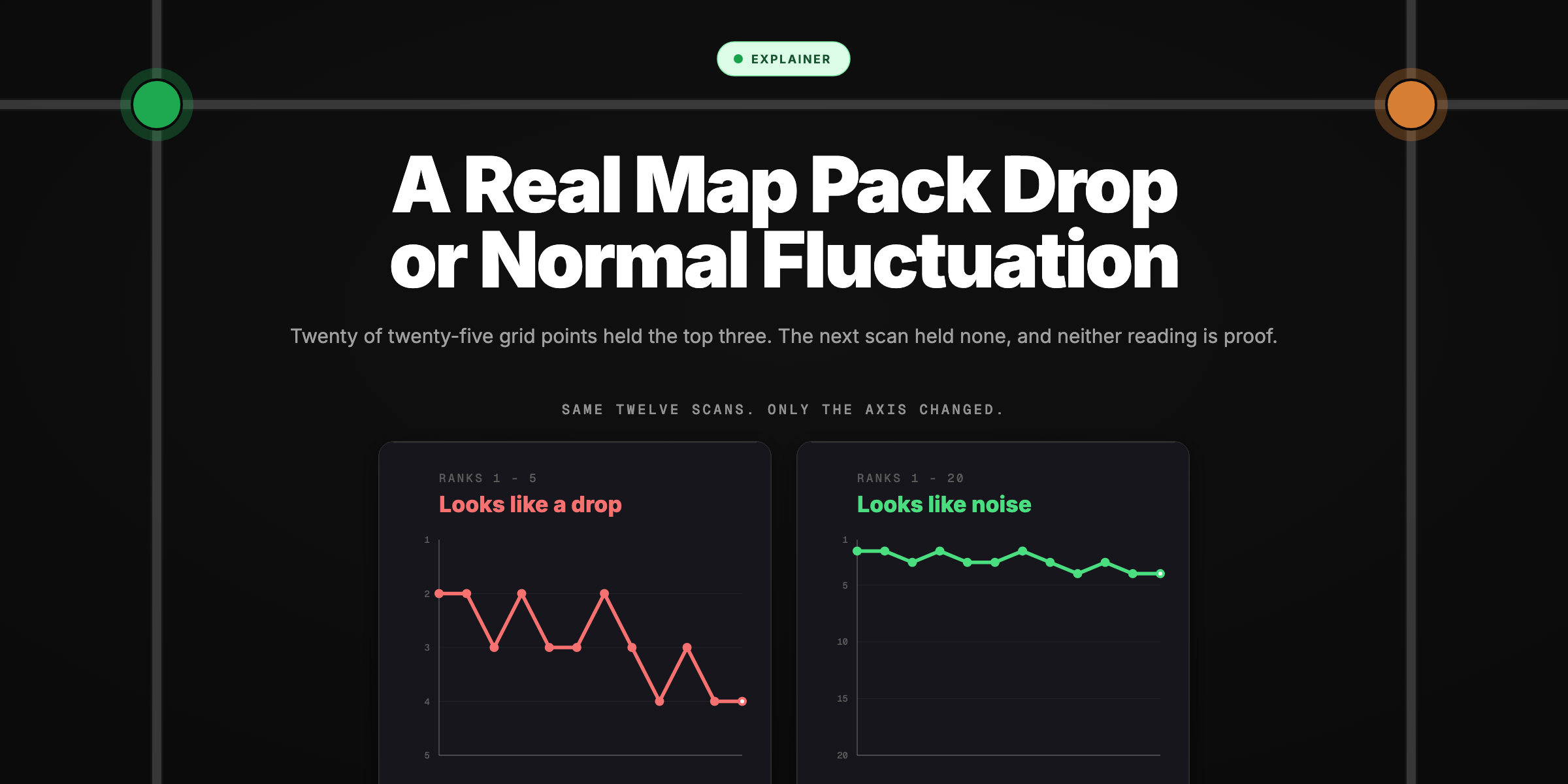
How to Tell a Real Map Pack Drop From Normal Daily Fluctuation
A four-place move from one check is almost never a drop. The test that separates a real fall from daily noise, and the number of checks it takes.
Sep 7, 2026·7 min read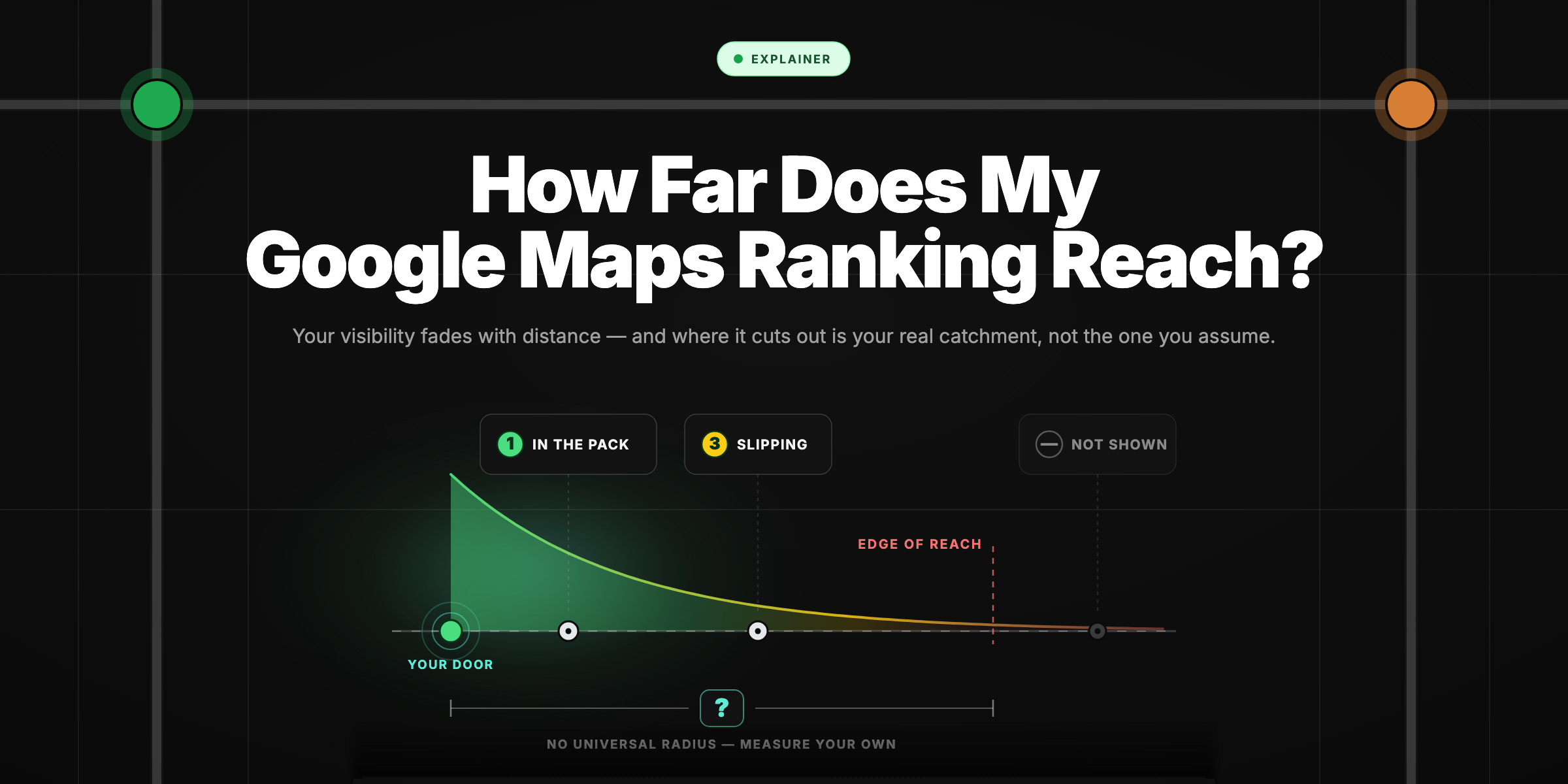
How Far Does My Google Maps Ranking Reach?
Your Google Maps ranking fades with distance. How far your visibility really reaches, what sets that range, and why your catchment isn't the one you assume.
Jul 20, 2026·11 min read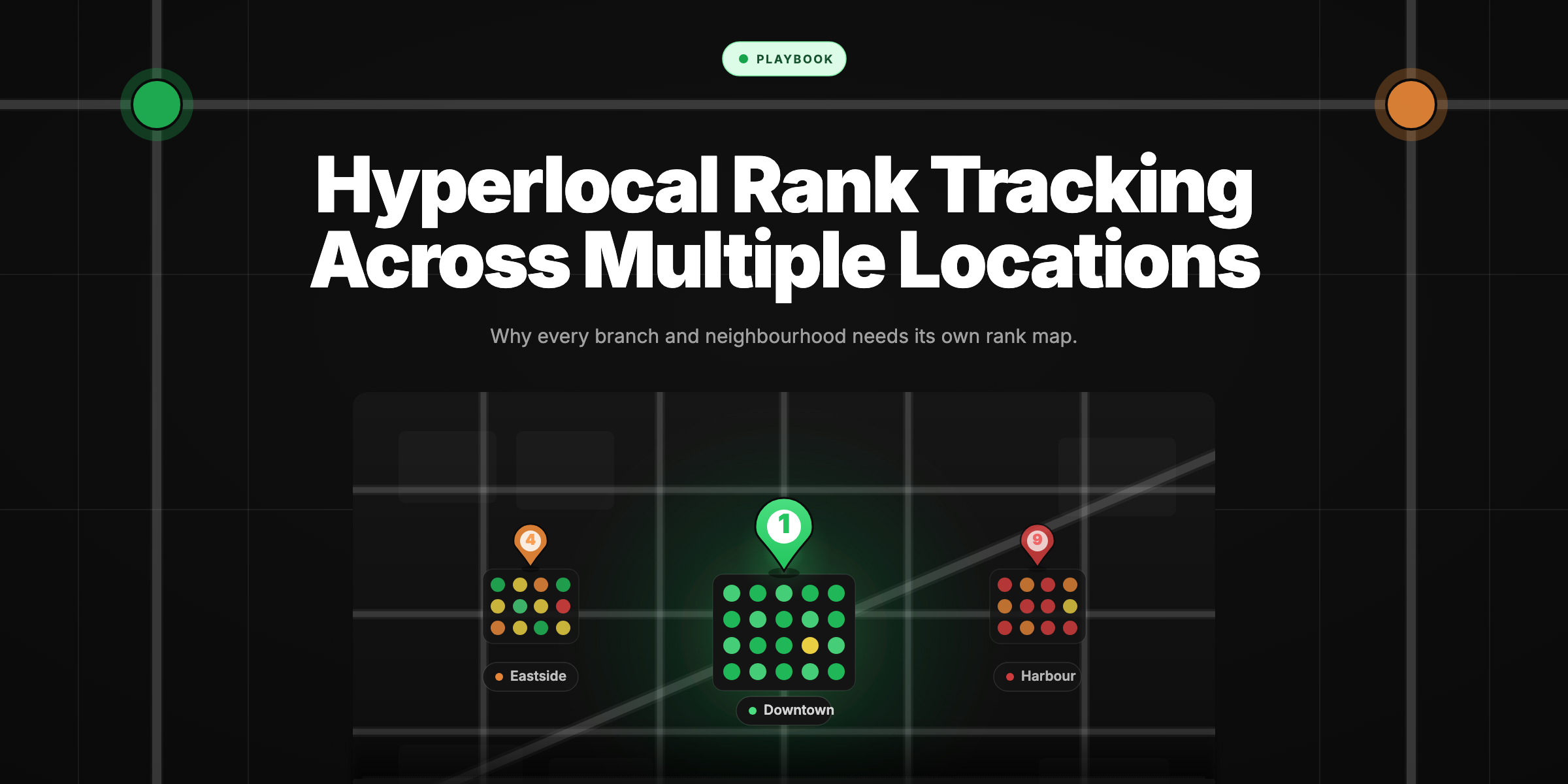
Hyperlocal Rank Tracker: One Heatmap Per Location
A hyperlocal rank tracker checks Map Pack position across each site's own catchment. Why a brand-level average hides the locations that are leaking.
Jul 15, 2026·9 min read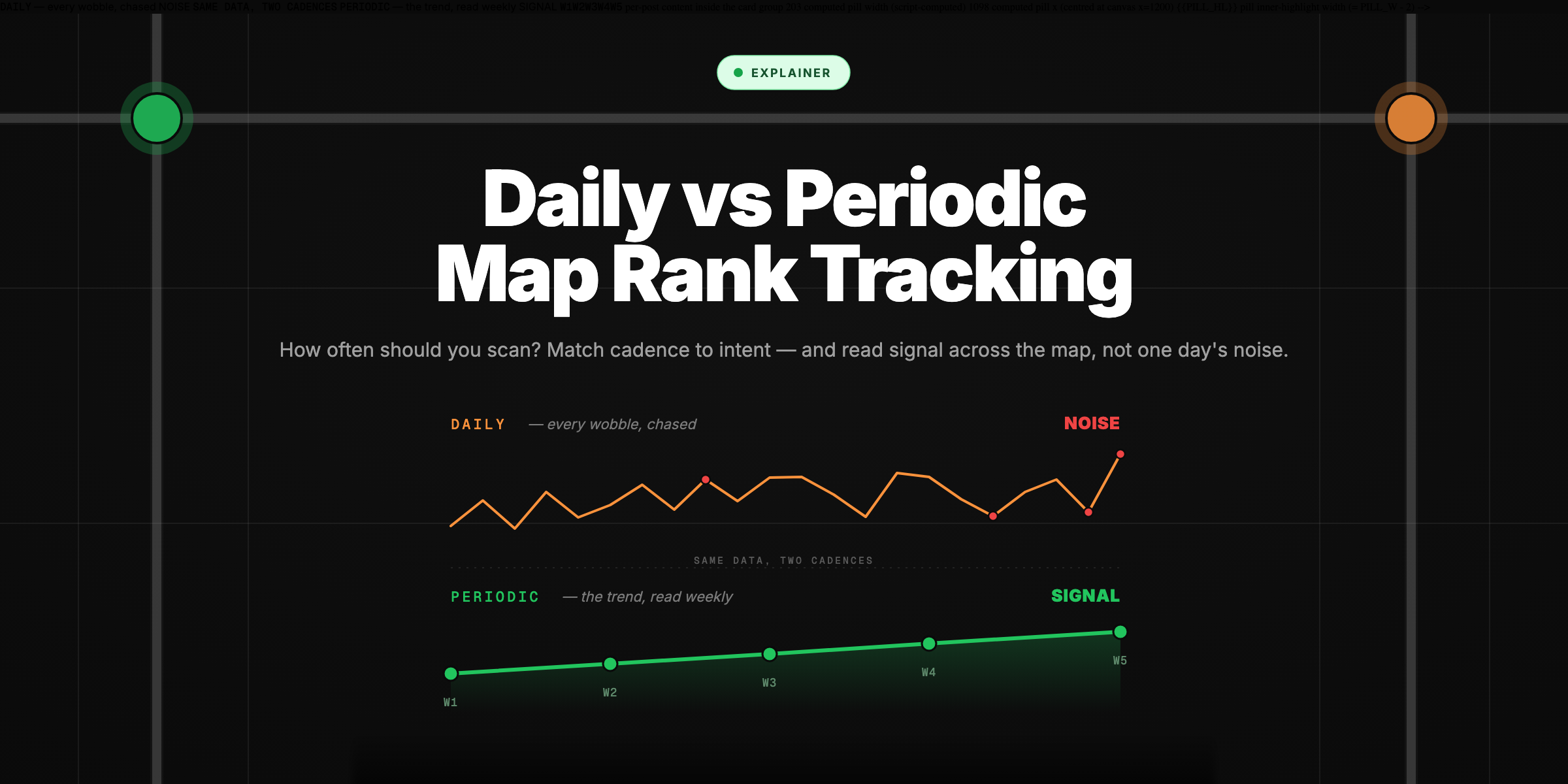
Daily vs Periodic Map Rank Tracking: How Often?
How often should you track your Google Maps ranking? Why daily checking breeds noise-chasing, when frequency is signal, how to match cadence to your goal.
Jul 3, 2026·10 min read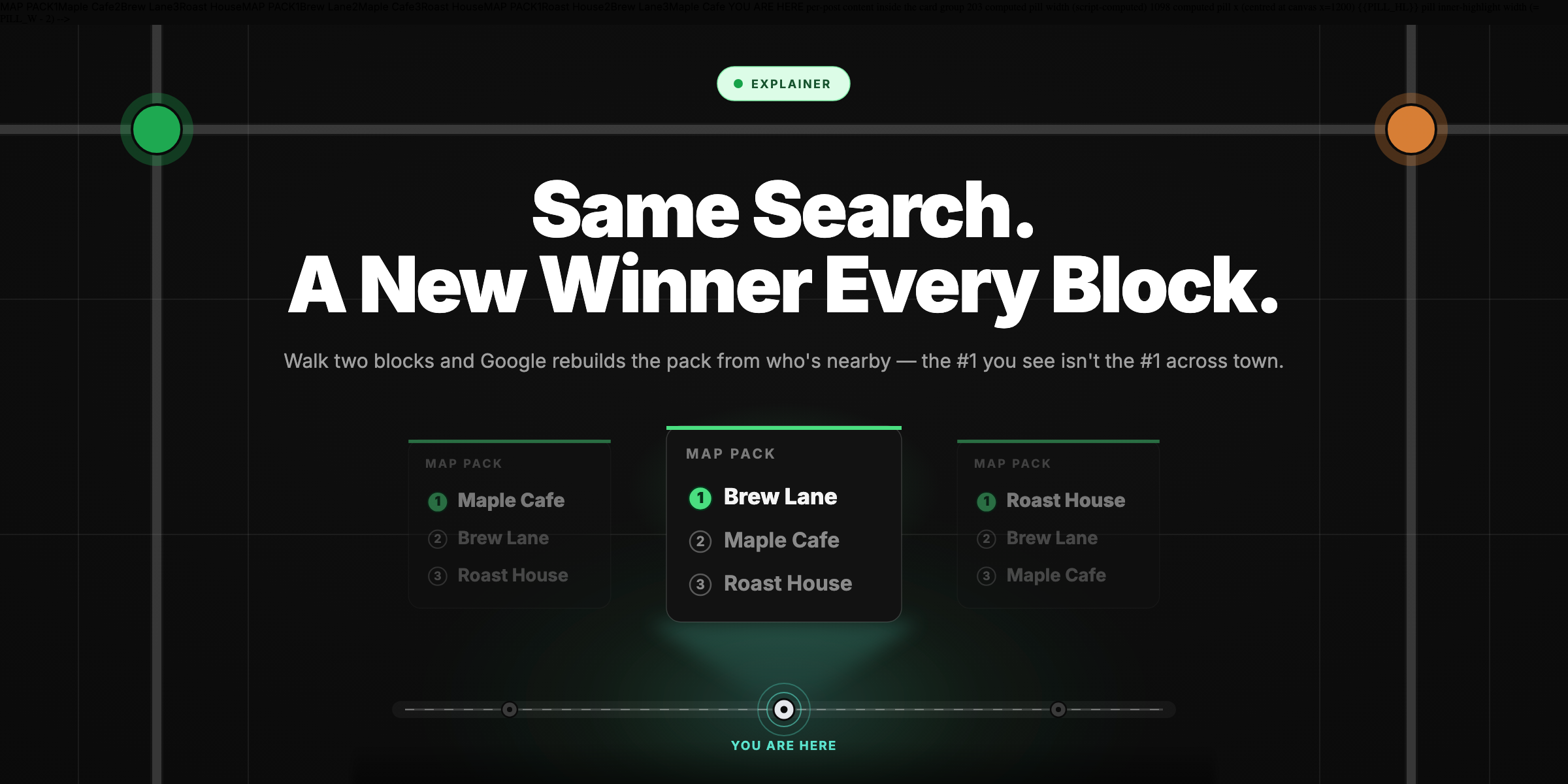
Why Your Google Maps Ranking Varies by Location
Your Google Maps rank changes from one neighbourhood to the next — same business, same keyword. Here's why local rankings vary by location.
Jun 24, 2026·9 min read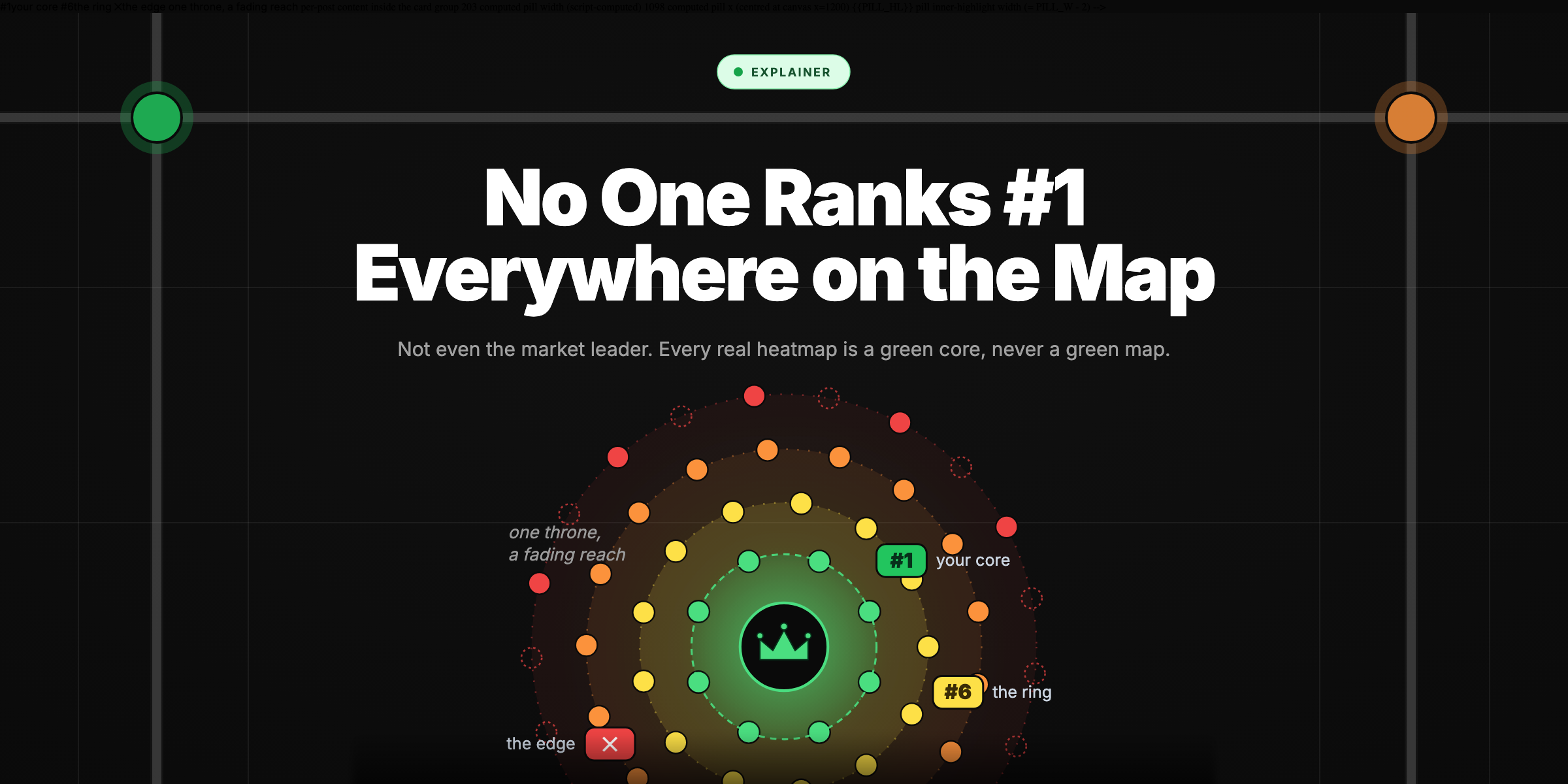
No Business Ranks #1 Everywhere on Google Maps
No local business ranks #1 across its whole service area — not even the market leader. Why total Map Pack domination is a myth, and the smarter goal.
Jun 23, 2026·11 min read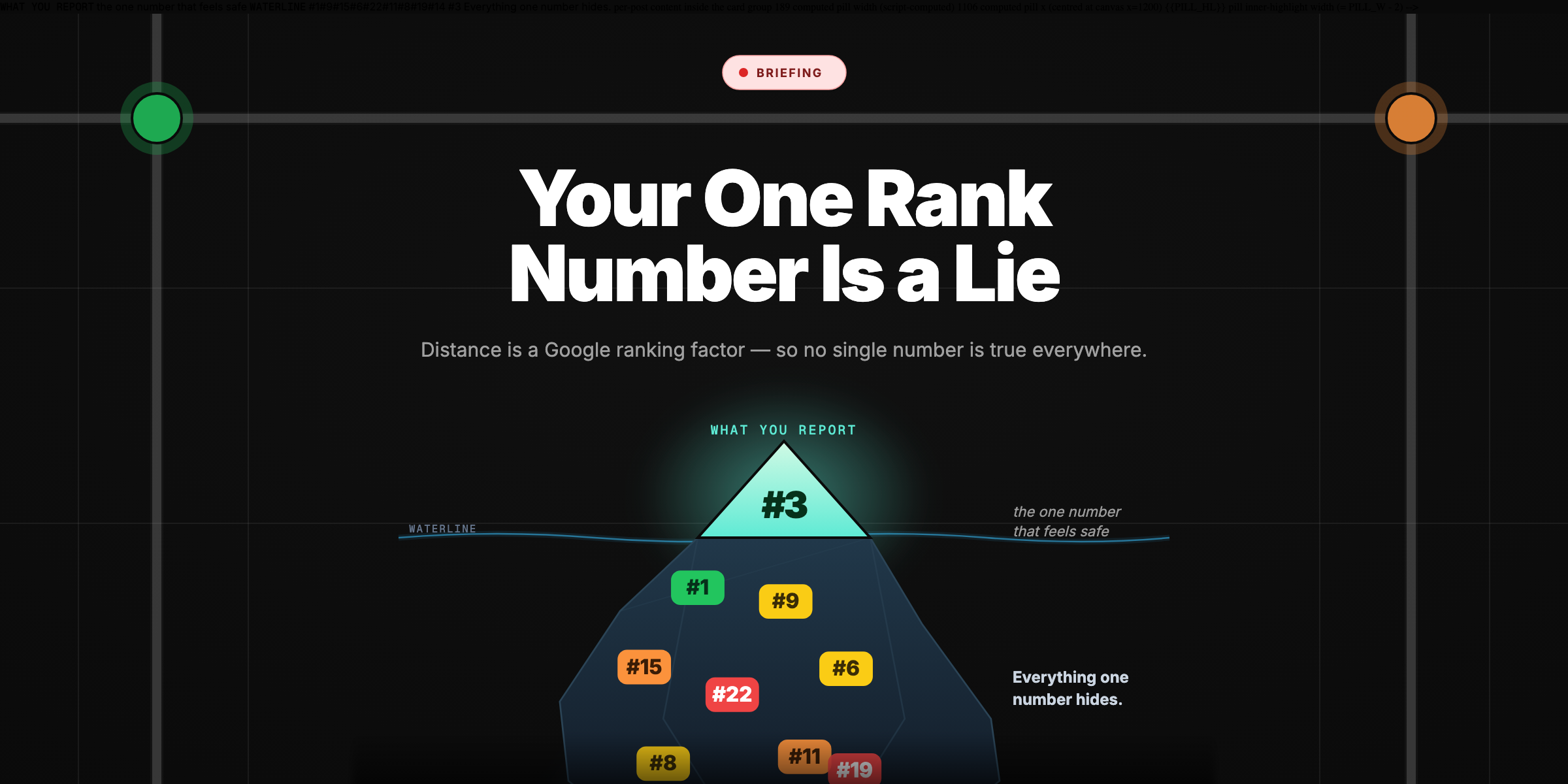
My Google Maps Ranking Dropped — What Actually Happened
You were #4, now you're #10, and nothing changed on your profile. A drop in one number usually means you lost some streets, not all of them. How to tell which.
Jun 22, 2026·14 min read
59% of Local Businesses Don't Track Their Map Pack
Neil Patel's data: 59% of local businesses don't track their Map Pack, and most who do watch a single rank number that lies. Here's the real picture.
Jun 20, 2026·13 min read
Checking from your own address tells you about your own address. Your customers are rarely standing there.
A ranking that "fell" has usually fallen in part of your area. Which part is the finding — one number cannot show it.
If you travel to customers there is no fixed point to measure from, so a single position is the wrong instrument entirely.
There is no such thing as "my Google Maps ranking"
Most owners answer with a number they got by searching from their own counter. Move three streets and it changes. Your position is a surface, and one number is a single sample of it.
Where You Rank: common questions
1What is geo-grid rank tracking?
It is checking the same keyword from many points spread across an area, instead of once from a single location, then plotting each result on a map. Green where you come up near the top, red where you do not. It shows the shape of your visibility rather than one sample of it.
2Why does my Google Maps ranking change from street to street?
Because distance between your business and the searcher is one of the strongest signals in the Map Pack. As the searcher moves, the set of businesses close to them changes, and so does the ranking. Nothing about your profile has to change for your position to change.
3I checked and I am #1 — is that real?
It is real for the spot you checked from, usually your own premises, which is the single most favourable point on the map for you. It says nothing about the neighbourhoods where your customers actually are.
4How far does my Google Maps ranking reach?
There is a distance past which you stop appearing, and it is not fixed. It is wider where there are few competitors in your category and narrows sharply where there are many. Finding that edge is the point of measuring across a grid rather than at a point.
5How often should I check my map rankings?
Weekly is enough for most businesses. Map results move day to day for reasons that have nothing to do with you, so daily checks mostly show noise. What matters is comparing the same points over time, so a change is a real change and not a different sample.