Four months of work,one rank numberto show for it.
The client checks from their own desk, sees the same position, and concludes nothing happened. A grid shows the ten blocks you won — which is the difference between a renewal and a churn conversation.
The client sees one thing. The map says another.
Left column is what lands in your inbox. Right column is what a grid on the same account usually shows.
"We are still not ranking."
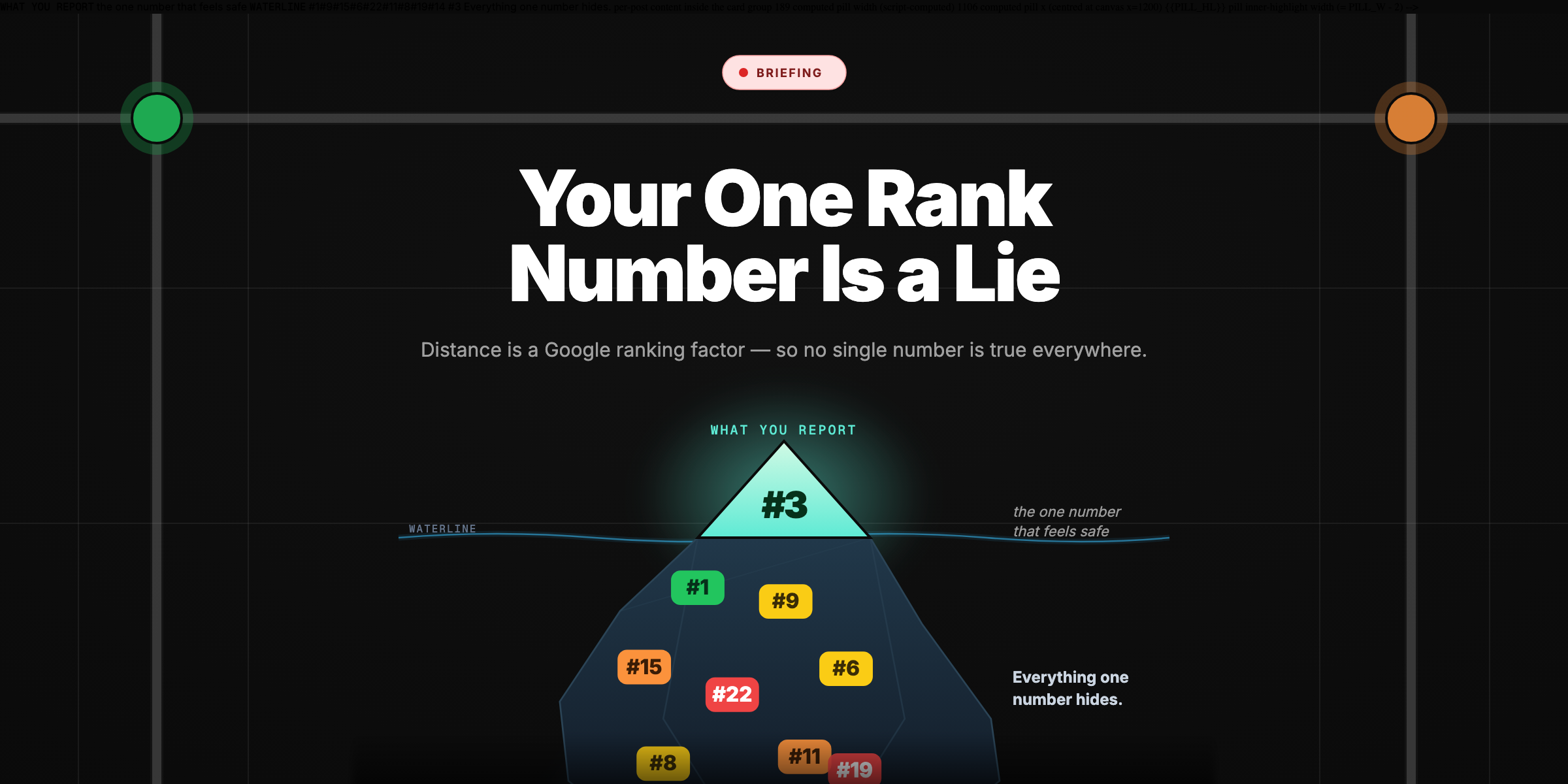
What the client saysThey are — in a band you moved and they never check. A single tracked position samples one point of a surface that varies street by street.
"Nothing changed in four months."
What the client saysA before-and-after grid is the only artifact that shows movement the client cannot see from their own postcode.
"Our competitor has worse reviews and beats us."
What the client saysProximity plus an exact category match, most of the time. Worth checking before you sell another content package against it.
"We are page one on Google — why not the map pack?"
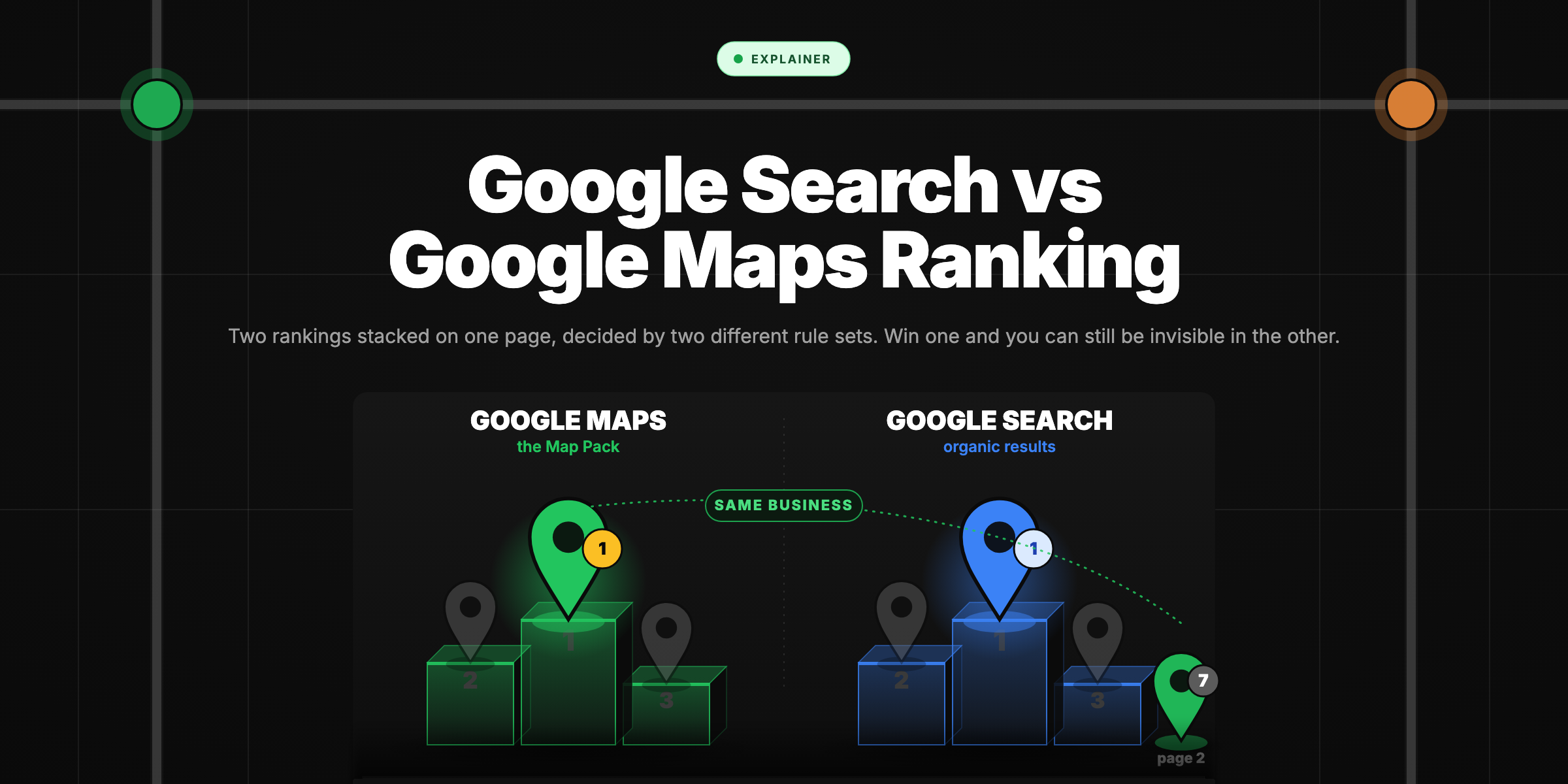
What the client saysDifferent signal sets. Strong organic performance says almost nothing about Map Pack visibility for the same query.
"Just track the keyword."
What the client saysFor a service-area business there is no single point to track from, so a single position is the wrong instrument, not a wrong number.
We did not write any of this.
Every line below is a real post. Each one links to the thread it came from — go and read the replies.
“After 4 months of SEO for a client, the results are disappointing to the client.”
129 replies — one of the most-answered posts in 1,464 we read.
Read the thread“Client's map pack ranking dropped 4 spots and nothing changed on their end. What do you check first?”
The diagnostic question vendors skip — they sell to the buyer, not the doer.
Read the thread“How can I rank page 1 on SERP but not top 3 on map pack for the same keyword?”
30 replies. Organic and the Map Pack run on different signals.
Read the thread“Can anyone tell me how someone with one review can rank top 3 in Map packs — in a competitive keyword at that?”
45 replies. Asked by a practitioner — the confusion runs all the way up.
Read the thread“Organic rankings and Map Pack rankings are influenced by different sets of signals.”
The answer, from the room itself.
Read the threadWhat a grid gives you that a rank number cannot
Not a prettier chart. Three things you can put in front of a client who is about to leave.
A before and after
Two scans, same points, weeks apart. Movement becomes something you can point at rather than something you have to argue for.
Where the reach ends
The edge of visibility is a real line on a map. It sets what the next phase should target, and it justifies the budget for it.
Why the competitor wins
Rival strength is rarely uniform. Seeing where they win narrows it to proximity, category, or genuine authority — three different fixes.
From the journal
Written for people who already know what a Map Pack is.
The questions people actually ask
Taken from public threads on this exact problem, and answered here rather than after a demo.
How is a grid different from a rank tracker?
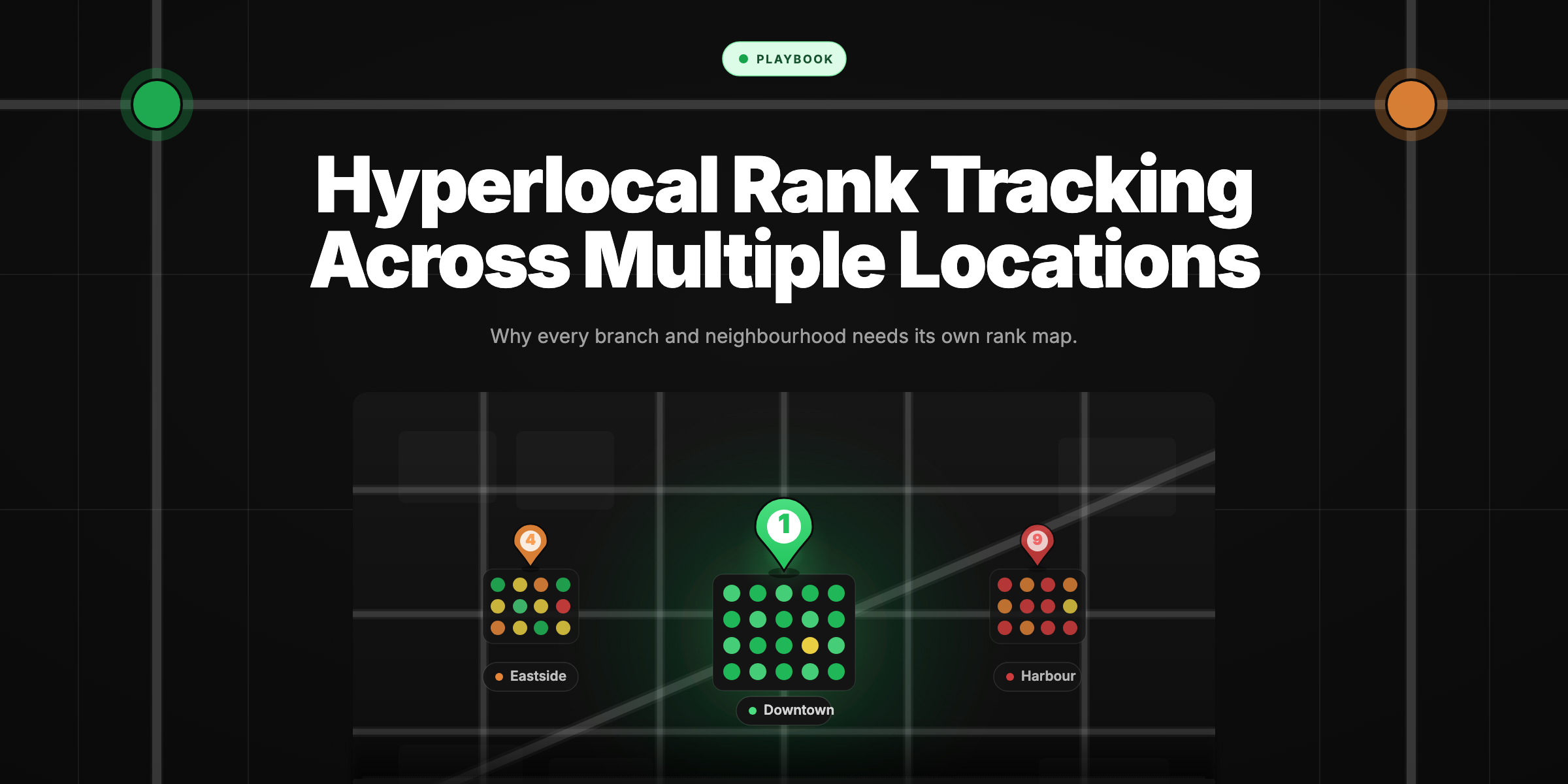
A rank tracker samples one point. A grid scores the same keyword at many points across an area, so you see the shape of visibility rather than a single sample of it. For local, the shape is the finding.
A client is page one organic but absent from the 3-pack. Why?
Organic and Map Pack results are ranked on different signals. Organic weighs the website; the Map Pack weighs the Business Profile, category and proximity to the searcher. Strong performance on one is not evidence about the other.
How do I show progress to a client who checks from their own office?
Run the same grid before and after. A client checking from one postcode is sampling a single point, and a point can stay flat while a whole band moves. The two scans side by side settle it without an argument.
A competitor with one review holds the pack. What do I check first?
Their distance from the searcher, then their primary category, then their business name. Practitioners answering this question in public land on proximity and exact-match category far more often than on authority.
Does this work for service-area businesses?
It is the case it exists for. A service-area business has no single point to measure from, so grid coverage across the service area is the only measurement that describes what is actually happening.